Digital Ritual
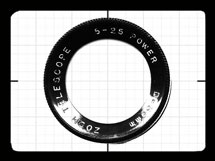 Exploring the relationship between the ritual and the digital, Christina Wong and I created a sacred space utilizing a circular form surrounded by video cameras which were then further enclosed by projection screens. The digital video was fed to each of the screens in real time, creating an enclosed environment of representations of the experience of 'being' in the circle.
No images were captured on tape or by any other photographic means - the space was created solely through the experience of those entering and remaining within the circle.
ritual and threeing
its relation to pure experience
Pure, unmediated experience is virtually impossible to achieve. There always exists a threshold between the experience (or actual) and the analyzation of that experience (the virtual). Many forms of spirituality attempt to either bridge this gap or to provide tools which may be used to transcend this form.
With the advent of the digital, a rift has formed in the threshold between the actual and the virtual. On a basic level, the digital is purely representational - simulating and mechanically reproducing (rather than creating). Our human experience occurs only in our interaction with the form - a reading of illusory layers that build meaning only through their multiplicity. We cannot learn with the digital (through experience) - we can only access a series of signs that represent information (data). Loosing ourselves in the form, we trick ourselves into believing that the mediating force is transparent/neutral. Data is truth. Sign becomes meaning. We have entered the age of the post-modern.
In terms of threeing (see Paul Ryan's work with this cybernetic form), this equates to one's inability to access firstness except through the process of secondness and thirdness. In fact, firstness becomes the action of doing secondness and thirdness and we begin to loose touch with experiencing life in a concrete way. This leads to the de-spiritualization of our digital culture - a loss of access to a 'fluctuating center' of life separate from form.
Ritual provides human consciousness with a method for dealing with the unknown. Language provides man with the capability for giving 'birth to concepts that come to posses those who have conceived them, concepts like god, heaven and hell.' (Roy Rappaport) These descriptions of the intangible are creations of an 'other'...an 'other' representing absence which helps us to understand what is 'not' there (empty spaces, absent creators, the dead). What was once outside the realm of the comprehensible now enters the range of the human conscious. But what happens when this unknown 'other' becomes our own selves? Bodies without presence in virtual space become mystified and inaccessible even to those who embody them.
Digital space deals with this by mystifying, fragmenting, and representing the human body in virtual space as a reproducible image. Representations of the body are held up as readable signs upon which meaning may be superimposed or forcibly taken. From pornography to the fragmentation of the human form, these illusions are of empty spaces - there is no presence in the digital world (only smoke and mirrors that simulate presence and are infinitely readable/interpretable). The issue becomes not only one of absence/presence...but one of representation. The body becomes an empty sign - a signifier without signifying anything but a representation of presence - a sign of a sign.
Our struggle with the physical body's relation to the virtual led Christina Wong and me to look towards ritual and performance. Concentrating on performance studies because of its anthropological base, we began to examine ritual within the framework of modern day spectacle. Looking to groups as various as La Fura Dels Baus, Richard Schechner's Performance Group, and ArtaudŐs Theater of Cruelty, we began to see the intense ties that bond performance to ritual. These groups struggle within a post-modern world in order to build illusion, break it down again, and confront the audience with the idea that there is only mediation. Pure experience is inaccessible except through mediation...and in our world illusion has begun to replace reality.
This brings us to the problem of getting locked into 2ndness and 3rdness - for how is presence and authenticity supported in a world of illusion and surface. Here, a fundamental problem of religion is touched upon. Struggling with the separation of the spiritual from the religious, we landed upon the idea that perhaps the spiritual is that which is 1stness and the religious is that which encapsulates 2ndness and 3rdness - the form which interprets experience. This form becomes problematic because it provides a space within which one may get lost without ever accessing the firstness of experience. Trapped in a form, some may fall into the system of rules and behaviors without ever recognizing depth or meaning. The digital makes this trap even more dangerous because of the multiplicity of its surfaces.
The question becomes whether or not pure 1stness is even possible. Can one experience? In a utopian world, ritual accomplishes this feat and allows for an unmediated experience within a form that has been proven safe. In ritual, even though an individual may be following a very strict structure, he is able to loose himself within the created space of performance. He uses presence to do this and is able to double himself using the physical body. Ritual is the point at which contradictions cease to be contradictions, and a participant is able to become the unknown 'other' while remaining the known self - he is able to occupy both positions of being/doing...to become both the signified and the signifier in order to seal the rift between the two. This bridging is what is awe inspiring to those that have encountered the phenomena. Loosing themselves in the form, 2ndness and 3rdness drop away so that each individual can occupy both positions in a state of 1stness.
The digital problematizes this way of looking at ritual because it is currently impossible to completely experience firstness in the digital world or to use physical presence in order to double oneself. In almost all cases, there is a mediating machine between the 'user' and the 'world'. One is forever stuck in an endless loop of relying on 2nd and 3rdness in order to access 1stness (or experience). In this way, the virtual seduces and we risk loosing even the actual....this is the 'liquidation' of reality.
Our 'ritual' serves not so much to solve any of these problems but to remind us all that we are physical bodies capable of a journey towards pure experience. We must not give up on the struggle for this experience in favor of the digital lest we loose our presence and spirit. It is an experiment as well in attempting to understand that which we cannot comprehend (our own presence) and therefore not replicate (the video reproductions that fall short of life). What we feel inside our bodies (the discomfort, the joy, the inexplicable feeling of life) cannot be represented in the digital. The cameras are there to remind us of the process of analyzation. Hopefully the process of looking and framing will be obvious and accentuate the experience of standing in a room just 'being' - unable to comprehend meaning.
Simulations cannot substitute for experience.
The struggle is to find ways in which the digital can support our own journeys of experience without standing in place of them. We have just begun on this journey.